
Stock Market Today: Legal Disclosures Driving the Biggest
Discover how mandatory legal disclosures and SEC filings dictate stock market movements. This authoritative guide breaks down the critical reports that every investor must understand.

Advertisement
As a Certified Private Wealth Manager and CPA, I've observed that the most significant and predictable stock market movements are not driven by speculation, but by information. Specifically, they are driven by the legally mandated disclosure of information. In the intricate dance between corporations and investors, the U.S. Securities and Exchange Commission (SEC) acts as the choreographer, ensuring that every step is transparent and fair. Understanding the rhythm and meaning of these required disclosures is not just an advantage; it is the foundation of prudent and informed investing in today's market. This comprehensive guide will illuminate the critical legal disclosures that dictate the flow of the market, providing you with the knowledge to interpret the events that truly matter.
The Bedrock of Fair Markets: The Role of the SEC
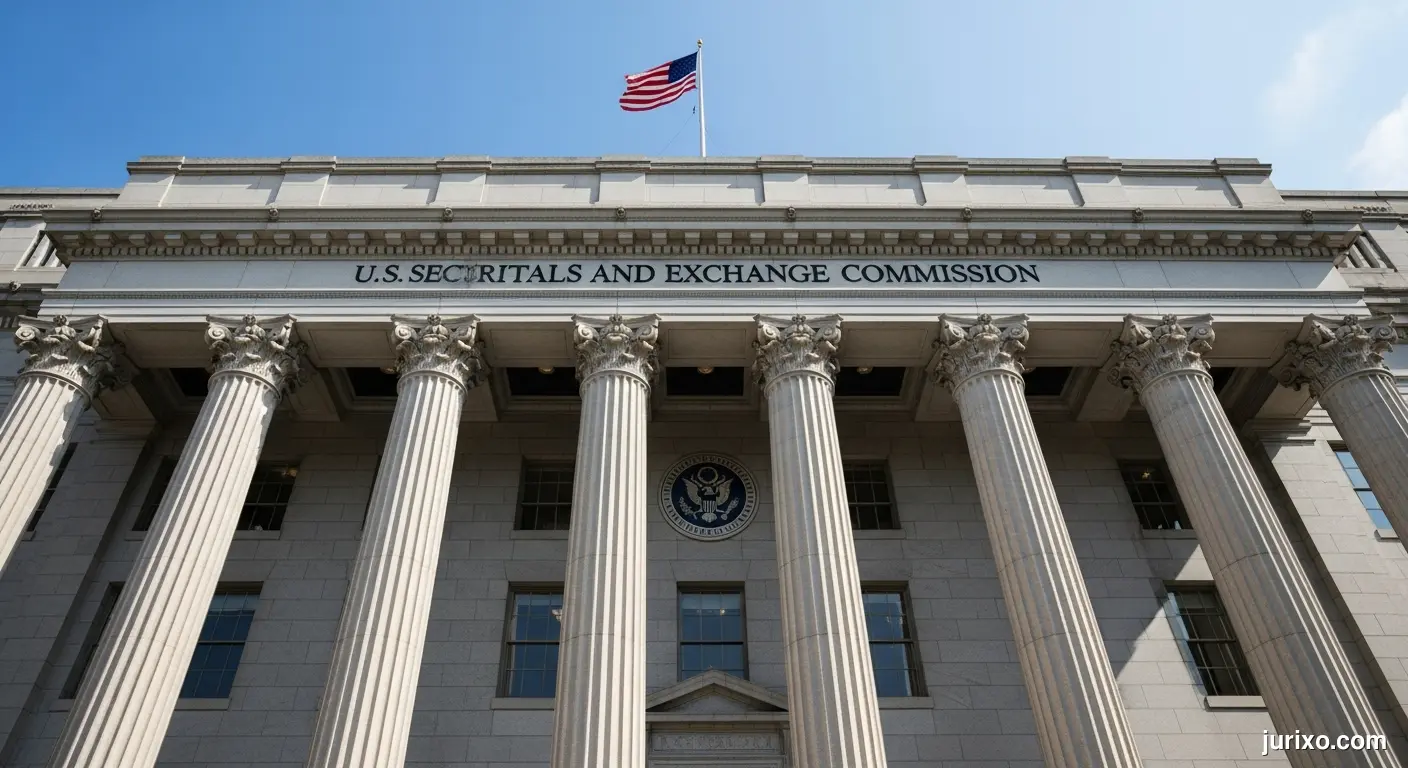
The entire structure of the modern U.S. stock market rests on the principle of transparency. The market crashes of the 1920s and the ensuing Great Depression taught a harsh lesson: a market operating in shadows, rife with speculation and secret dealings, is inherently unstable and destined to fail the public. In response, the U.S. Congress established the Securities and Exchange Commission in 1934 with a clear mission: to protect investors, maintain fair, orderly, and efficient markets, and facilitate capital formation.
The primary tool the SEC uses to achieve this mission is the enforcement of mandatory public disclosure. The core idea is that all investors should have access to certain basic facts about an investment prior to buying it, and for as long as they hold it. Publicly traded companies are required by law to submit regular, detailed reports to the SEC, which are then made available to the public. This process turns private corporate information into public knowledge, leveling the playing field and allowing investors to judge a company's prospects and value based on a standardized set of facts.
Why This Matters for Today's Stock Prices
Every significant event in a public company’s life—from a stellar quarterly performance to a disastrous product recall, from a planned merger to the sudden departure of a CEO—must be reported. These disclosures are not suggestions; they are legal obligations governed by a complex web of securities laws. When this information is released, it is absorbed by the market in minutes, or even seconds. Algorithms and human traders alike react to the news, adjusting their valuation of the company and driving the stock price up or down. Therefore, the "stock market today" is, in large part, a real-time reflection of the market processing these required legal disclosures.
The Market Movers: Key SEC Filings You Must Know
While a company may issue press releases, it's the formal, legally binding documents filed with the SEC that carry the most weight. These filings are submitted to the SEC's EDGAR (Electronic Data Gathering, Analysis, and Retrieval) system, which serves as the public's free portal into the corporate soul. Here are the most critical filings that drive daily market activity.
Form 8-K: The Current Report
If one document is the heartbeat of the market, it's the Form 8-K. Unlike quarterly or annual reports, an 8-K is filed in response to specific "material events" that shareholders must be aware of promptly. Companies generally have just four business days to file an 8-K after a triggering event, making it a crucial source of immediate, market-moving news.
Key events that trigger an 8-K filing include:
- Entry into or termination of a material definitive agreement: This could be a major new client contract or the loss of one.
- Bankruptcy or receivership.
- Completion of acquisition or disposition of assets: Announcing a significant purchase or sale of a business line.
- Results of operations and financial condition: Often used to pre-announce earnings, especially if they are unexpectedly good or bad.
- Creation of a direct financial obligation.
- Changes in certifying accountant.
- Changes in control of the company.
- Departure or election of directors or principal officers: The sudden resignation of a CEO or CFO is a classic market-moving 8-K event.
Why it Drives the Market: An 8-K provides unscheduled, high-impact news. An unexpected CEO departure can signal internal turmoil and send a stock plummeting, while the announcement of a major new contract can cause it to soar.
Form 10-K: The Annual Report
The Form 10-K is the most comprehensive annual summary of a company's business and financial health. It is a large, detailed document that provides a deep dive into the company's operations, audited financial statements, and future outlook. While much of the financial data might be anticipated from previous quarterly reports, the 10-K's value lies in its depth and narrative.
Key sections of a 10-K include:
- Business Overview: A detailed description of the company's products, services, markets, and overall strategy.
- Risk Factors: A crucial section where the company must legally disclose all potential risks that could materially harm its business, from competitive pressures to regulatory changes. This is a treasure trove for diligent investors.
- Selected Financial Data: A summary of the company's financial performance over the last five years.
- Management's Discussion and Analysis of Financial Condition and Results of Operations (MD&A): Management's narrative explaining the financial results from their perspective.
- Audited Financial Statements: The income statement, balance sheet, and statement of cash flows, all audited by an independent accounting firm.
Why it Drives the Market: The 10-K sets the strategic tone for the year. The "Risk Factors" and MD&A sections can reveal management's concerns and priorities, influencing long-term investor sentiment. Any significant changes or new risks disclosed can lead to a re-evaluation of the stock's fair value.
Form 10-Q: The Quarterly Report
The Form 10-Q is the quarterly update. It is similar to a 10-K but is less detailed and the financial statements are typically unaudited. Companies must file a 10-Q for each of their first three fiscal quarters.
A 10-Q provides an essential checkpoint on the company's progress toward its annual goals. It updates the financial statements and includes a new MD&A section for the quarter. Any significant legal proceedings or changes to risk factors must also be disclosed.
Why it Drives the Market: Quarterly earnings are one of the most powerful drivers of short-term stock price volatility. A company's stock price is often based on expectations for its earnings. When the 10-Q is released, the reported earnings per share (EPS) and revenue are compared to analyst estimates. Beating those estimates can send a stock higher, while missing them can lead to a sharp sell-off.
Insider Activity and Trading Disclosures
The law recognizes that corporate "insiders"—such as officers, directors, and owners of more than 10% of the company's stock—have access to sensitive information before it becomes public. To prevent them from unfairly profiting from this access, the SEC has strict rules governing their transactions, a practice known as insider trading.
Forms 3, 4, and 5
These are the key filings for monitoring the trading activity of corporate insiders.
- Form 3: An initial filing made when a person first becomes an insider.
- Form 4: Filed whenever an insider makes a transaction in the company's stock. This must be filed within two business days of the transaction.
- Form 5: An annual filing to report any transactions that should have been reported earlier on a Form 4 or were eligible for deferred reporting.
Why it Drives the Market: Form 4 filings are watched obsessively by investors. A "buy" can signal that management is confident in the company's future prospects. A large number of insiders buying stock (a "cluster buy") is often seen as a very bullish signal. Conversely, insiders selling large amounts of their stock can be a red flag, potentially indicating that they believe the stock is overvalued or that negative news is on the horizon.
Rule 10b5-1 Trading Plans
To allow insiders to sell stock without being accused of insider trading, the SEC created Rule 10b5-1. This rule permits insiders to set up a predetermined, automated trading plan at a time when they are not in possession of Material Nonpublic Information (MNPI). The plan specifies the future dates and prices at which they will sell stock. While these plans provide a legal defense, the announcement of a large 10b5-1 plan by a key executive can still be interpreted by the market as a sign of their intent to liquidate holdings, sometimes putting downward pressure on the stock.

M&A and Corporate Control Disclosures
Few events can impact a stock's price more dramatically than a merger or acquisition (M&A). The disclosure process surrounding these events is intensely regulated to ensure fairness and prevent manipulation.
Schedule 13D and 13G
When an investor or group of investors acquires more than 5% of a company's stock, they must disclose it by filing a Schedule 13D or 13G.
- Schedule 13G: A shorter form filed by "passive" investors who do not intend to influence or control the company.
- Schedule 13D: A longer, more detailed form for "activist" investors who do seek to influence the company. This filing requires the activist to state their intentions, which could include seeking board seats, pushing for a sale of the company, or other major strategic changes.
Why it Drives the Market: The filing of a Schedule 13D by a known activist investor can cause a stock to jump in price instantly. The market anticipates that the activist's pressure will "unlock value," whether through operational improvements, a sale of the company, or other means.
Form S-4 and Tender Offer Filings
When a merger or acquisition is formally proposed, a flurry of complex legal documents is triggered. If a company is using its own stock to acquire another, it must file a Form S-4, which is a registration statement detailing the terms of the deal and providing extensive information about both companies.
If one company is making an offer to buy the shares directly from the shareholders of another company (a "tender offer"), it must file a Schedule TO. These documents contain the specific price and conditions of the offer and are delivered to the target company's shareholders.
Why it Drives the Market: These filings make a potential M&A deal official. The offer price contained within a Schedule TO or the exchange ratio in an S-4 immediately becomes the benchmark for the target company's stock, often causing its price to rise sharply toward the proposed acquisition price.
The Mandate for Equal Access: Regulation FD
For decades, there was a pervasive issue of "selective disclosure," where companies would provide important information to a select few Wall Street analysts or large institutional investors before releasing it to the general public. This gave the privileged few an unfair advantage.
In 2000, the SEC enacted Regulation Fair Disclosure, or Reg FD, to end this practice. Reg FD mandates that when an issuer discloses material nonpublic information to certain individuals (like analysts or investors), it must also disclose that information to the public at large. This public disclosure must be made simultaneously for intentional disclosures and promptly for unintentional ones.
Why it Drives the Market: Reg FD is the great equalizer. It ensures that the small retail investor gets the same market-moving information at the same time as the giant hedge fund. Companies now typically satisfy Reg FD by filing a Form 8-K, issuing a press release, or holding a publicly accessible conference call, ensuring that new information disseminates to the entire market at once, leading to more efficient and fair price discovery.

Conclusion: Information is Power
In the complex world of the stock market, knowledge derived from legally required disclosures is the ultimate currency. While rumors and speculation can cause short-term noise, the long-term trajectory and most significant daily movements of stocks are inextricably linked to the formal, factual information disclosed in SEC filings. As a CPA and wealth manager, I urge all investors to move beyond headlines and engage directly with these primary source documents. By learning to read and interpret Forms 8-K, 10-K, 10-Q, and the various ownership and M&A filings, you transform from a passive spectator into an informed participant, capable of making decisions based on the same bedrock of fact that drives the market itself.
Frequently Asked Questions (FAQ)
What is the single most important SEC filing for day-to-day stock moves?
The Form 8-K is arguably the most important for immediate, day-to-day stock price movements. It is filed at unscheduled times to report material events, such as a CEO's resignation or a major new contract, providing new, high-impact information that the market must price in quickly.
Where can I access these SEC filings for free?
All public company filings are available to the public for free through the SEC's EDGAR (Electronic Data Gathering, Analysis, and Retrieval) database. You can search for companies by name or ticker symbol to find all of their historical filings.
If an insider is selling stock, does it always mean bad news?
Not necessarily. While large-scale selling by multiple insiders can be a red flag, an individual may sell for many reasons that have nothing to do with the company's performance, such as for personal financial planning, tax purposes, diversification, or to fund a large purchase. It is more telling to look for patterns, such as multiple insiders selling simultaneously or selling that deviates from their normal behavior.
What is the difference between a 10-K and a company's Annual Report?
The Form 10-K is the official, legal version of the annual report filed with the SEC. It contains detailed, audited financial data and specific disclosures required by law. Companies also often produce a separate, glossy "Annual Report to Shareholders," which is more of a marketing document. While it contains much of the same information, it is presented with more graphics and narrative and is designed to be more visually appealing, whereas the 10-K is a strict, text-based legal filing.
What is "Material Nonpublic Information" (MNPI)?
Material Nonpublic Information (MNPI) is any information about a company that has not been released to the public and that a reasonable investor would likely consider important in making an investment decision. Examples include unannounced quarterly earnings, pending merger talks, or upcoming regulatory decisions. Trading on the basis of MNPI is illegal insider trading.
Advertisement
Last Updated: