
Avoid Penalties on Your Looming School Tax Deadline
Your school tax deadline is a critical financial obligation. This authoritative guide details how to find your due date, avoid costly penalties, and explore potential tax relief programs.

Advertisement
As a Certified Private Wealth Manager and CPA, I've seen firsthand how easily homeowners can be caught off guard by property tax deadlines, particularly school taxes. These substantial bills often arrive with their own unique schedules, separate from your mortgage payment or federal income tax filings, creating a perfect storm for accidental delinquency. The consequences of a missed payment—steep penalties, mounting interest, and in the worst-case scenario, a lien on your home—are far too severe to ignore. This comprehensive guide is designed to demystify the process, empowering you to take control of your school tax obligations, avoid costly mistakes, and safeguard your financial well-being.
Understanding School Taxes: More Than Just a Line Item
Before we discuss deadlines and penalties, it’s crucial to understand what school taxes are and why they matter. School taxes are a form of property tax levied by your local school district. They are the primary funding mechanism for public K-12 education in your community, paying for everything from teacher salaries and classroom supplies to building maintenance and extracurricular programs.
It's a common misconception that these taxes are set or collected by the federal government. In reality, school taxes are hyper-local. Here’s a breakdown of how they are calculated:
- Property Assessment: Your local county or municipal assessor's office determines the value of your property. This is known as the assessed value.
- Millage Rate: Your locally elected school board determines the annual budget needed to operate the schools. This budget is then divided by the total assessed value of all property within the school district to arrive at a "millage rate" (the tax rate).
- Your Tax Bill: The millage rate is applied to your property's assessed value to calculate your specific school tax liability for the year.
Because this process is controlled at the local level, the tax rates, due dates, and regulations can vary dramatically from one town to the next, even within the same state.
The Critical Question: When Are Your School Taxes Due?
This is the single most important piece of information you need, and there is no universal answer. Unlike the IRS tax deadline, school tax deadlines are not standardized. They are set by your local taxing authority and can vary significantly.
Some jurisdictions may require a single lump-sum payment, while others offer semi-annual or quarterly installment plans. For example, one school district might have deadlines in September and January, while a neighboring district might require payments in October and April.
How to Find Your Specific Deadline:
- Examine Your Tax Bill: Your school tax bill is the most direct source of information. It will clearly state the due date(s) and the amounts for each installment.
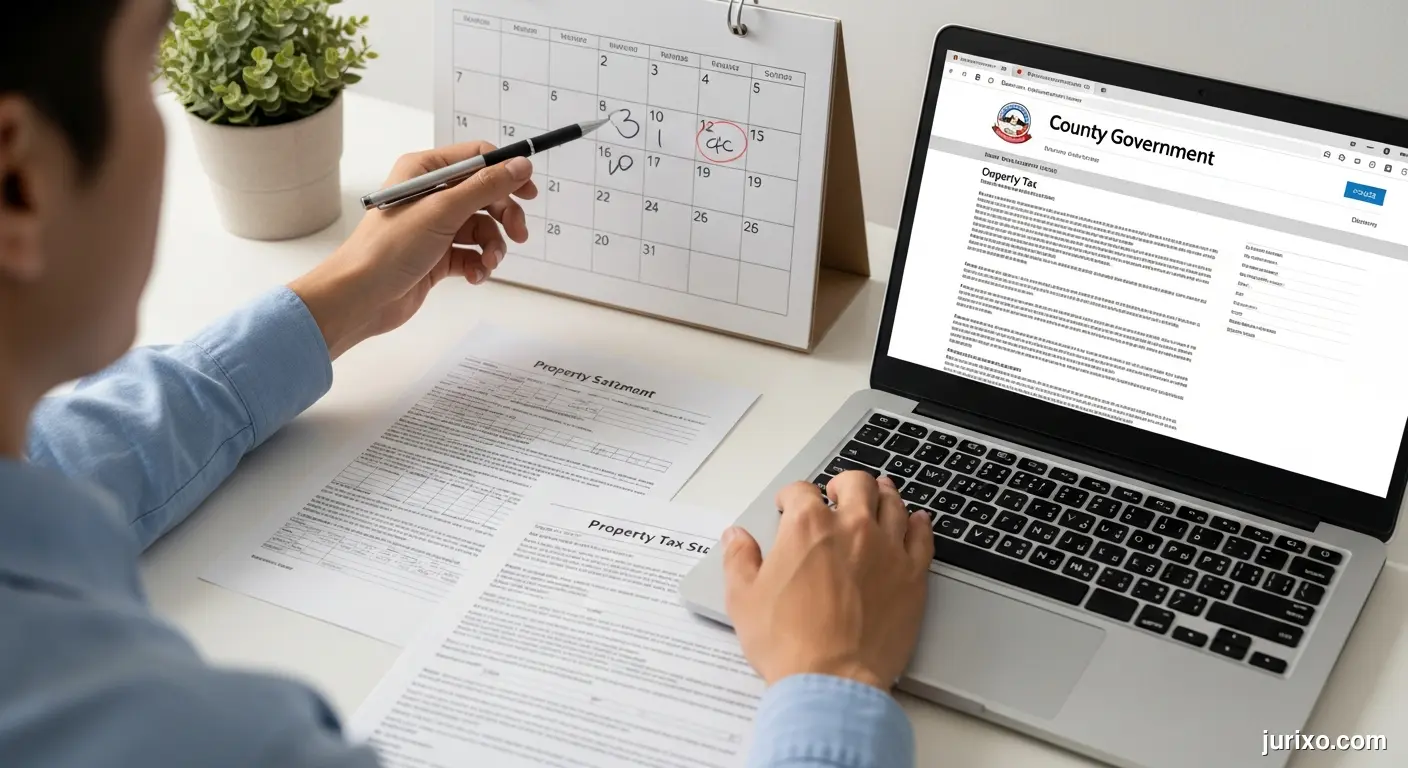
- Visit Your Local Tax Collector's Website: The most reliable digital source is the official website for your county or town's tax assessor-collector. You can typically find this by searching online for "[Your County Name] tax collector" or "[Your Town Name] property tax". These sites often have a portal where you can look up your property by address or parcel number to view your bill, payment status, and due dates.
- Call the Office: If you're unable to find the information online or did not receive a bill, call your local tax collector's office directly. Do not assume that not receiving a bill exempts you from payment; you are still responsible for paying on time.
The High Cost of Procrastination: A Breakdown of Late Penalties
Missing your school tax deadline is not like being a day late on a utility bill. The penalties are often severe, mandated by state or local law, and can accumulate rapidly. While the exact penalty structure varies, it generally follows a multi-stage process.
- Immediate Late Penalty: The moment your payment is past due, a penalty is typically applied. This can be a flat fee or, more commonly, a percentage of the unpaid tax, such as 10%. On a $6,000 tax bill, that's an immediate $600 penalty.
- Accruing Interest: In addition to the initial penalty, interest begins to accrue on a monthly basis on the entire unpaid balance (your original tax plus the penalty). This interest rate can be as high as 1.5% per month, which equates to an 18% annual rate.
- Additional Fees: Jurisdictions may also charge administrative fees for sending delinquent notices or for other collection-related costs.
Let's consider a realistic example: Suppose your school tax installment of $5,000 was due November 10th.
- On November 11th, a 10% penalty is applied: $500. Your new balance is $5,500.
- On December 11th, monthly interest of 1.5% is charged on the new balance: $82.50. Your new balance is $5,582.50.
- On January 11th, another 1.5% interest is charged: $83.74. Your new balance is $5,666.24.
In just two months, your bill has increased by over $666, and it will continue to grow until paid.
The Unthinkable: What Happens if You Don't Pay?
Chronic failure to pay property taxes can have devastating consequences, culminating in the loss of your home. This is not a quick process, but it is a very real one.
The Tax Lien
If taxes remain unpaid, the taxing authority will place a tax lien on your property. A lien is a legal claim against your asset that secures the debt. This lien "clouds" the title of your home, making it impossible to sell, refinance, or obtain a home equity loan until the debt is satisfied. The lien takes priority over other claims, including your mortgage. This is why mortgage lenders often require escrow accounts—to protect their own financial interest in the property.
The Tax Sale
If the tax lien remains unpaid for a period defined by state law (often between one and three years), the taxing authority can initiate a tax sale. The process varies by state, but generally falls into two categories:
- Tax Lien Sale: The government sells the lien to an investor. The investor pays the delinquent taxes to the government and now has the right to collect the debt, plus high-interest rates, from you. If you fail to pay the investor within a specified "redemption period," they can foreclose and take ownership of your home.
- Tax Deed Sale: In other states, the government sells the property itself at a public auction. The winning bidder gets the deed to your home, and you could be evicted. While there are typically multiple notices and opportunities to pay before this happens, it is the ultimate and most severe consequence of non-payment.

Proactive Strategies to Manage and Pay Your School Tax Bill
The key to avoiding these dire outcomes is proactive financial management. As your financial advisor, I recommend a multi-step approach to ensure you're always prepared.
Step 1: Budgeting and Planning
Treat your school taxes as a non-negotiable monthly expense, just like your mortgage.
- Use an Escrow Account: If you have a mortgage, the easiest method is to have your lender maintain an escrow account. With this arrangement, your lender collects approximately 1/12th of your estimated annual property taxes with each monthly mortgage payment. They hold the funds in the escrow account and then pay the tax bills on your behalf when they come due.
- Create a "Sinking Fund": If you own your home outright or don't have an escrow account, you must create your own. Open a dedicated high-yield savings account specifically for property taxes. Divide your total annual property tax bill by 12 and set up an automatic monthly transfer from your primary checking account into this "sinking fund." This disciplined approach ensures the cash is available when the bill arrives.
Step 2: Choosing Your Payment Method
When it's time to pay, you have several options.
- Online Payment: This is typically the most convenient method. Always pay through the official county tax collector's website. Be wary of third-party payment processors that may appear in search results, as they often charge significant extra fees. Official sites may charge a "convenience fee" for credit card payments, often a percentage of the transaction (e.g., 2-3%). While e-checks may have a smaller flat fee or be free.
- Payment by Mail: If you pay by mail, the postmark date is what matters. To be safe, especially near a deadline, take your envelope to the post office and ask for it to be hand-canceled with that day's date. Using certified mail provides proof that you mailed the payment on time.
- In-Person Payment: You can always pay in person at the tax collector's office.
Step 3: Federal Tax Implications – The SALT Deduction
Your local property taxes, including school taxes, may be deductible on your federal income tax return. This is part of the State and Local Tax (SALT) deduction. However, the Tax Cuts and Jobs Act of 2017 instituted a significant change. Currently, the total amount you can deduct for all state and local taxes combined—including property, income, and sales taxes—is capped at $10,000 per household per year. You must itemize your deductions on Schedule A of your Form 1040 to claim the SALT deduction. For the most current information, always consult the official IRS website or a qualified tax professional.
Are You Eligible for Relief? Exploring Exemptions and Abatements
Many states and local jurisdictions offer programs designed to reduce the property tax burden for certain homeowners. These are not automatic; you must research and apply for them, and there are strict deadlines.
Common types of exemptions include:
- Homestead Exemptions: For owner-occupied, primary residences.
- Senior Citizen Exemptions: Available to homeowners over a certain age (often 65) who meet specific income requirements.
- Disability Exemptions: For individuals who are totally and permanently disabled and meet income limits.
- Veterans' Exemptions: For qualifying veterans, often requiring a service-connected disability rating.
A well-known example is New York's School Tax Relief (STAR) program, which provides a partial exemption from school property taxes for eligible homeowners. To find out what programs are available to you, visit your county assessor's website and look for a section on "Exemptions" or "Tax Relief."

Your Action Plan: A Step-by-Step Checklist to Avoid Penalties
Take these steps today to ensure you're in complete control of your school tax obligations.
- Immediately: Locate your most recent property tax bill or go online to your county's tax portal.
- This Week: Identify the exact due dates for your school taxes for the entire year. Add these dates to your digital and physical calendars with multiple reminders.
- This Week: While on the tax assessor's website, navigate to the "Exemptions" or "Tax Relief" section. Read the eligibility requirements for all available programs (senior, veteran, homestead, etc.) and note the application deadlines, which are often months before the tax is due.
- Next Week: If you do not have an escrow account, calculate 1/12th of your total annual property tax bill. Set up a recurring automatic transfer for this amount from your checking account to a separate high-yield savings account.
- One Month Before Deadline: Your calendar reminder should prompt you to confirm the funds are available in your savings account and to double-check the payment amount on your tax bill.
- Two Weeks Before Deadline: Decide on your payment method. If paying by mail, prepare the check and envelope. If paying online, ensure you have bookmarked the correct official government website.
- On Payment Day: Execute the payment. Save a digital copy of the online payment confirmation or the certified mail receipt. Store this confirmation with your other important tax documents.
By following this disciplined checklist, you transform a source of potential anxiety into a manageable component of your personal finances.
Frequently Asked Questions (FAQ)
Q1: Can I pay my school taxes with a credit card? A: Most jurisdictions now accept credit cards, but almost always through a third-party processor that charges a convenience fee, typically 2-3% of the payment amount. While this is an option to avoid delinquency, you should weigh the fee against the value of any credit card rewards you might earn. Paying by e-check often has a much lower flat fee or is sometimes free.
Q2: I never received a school tax bill. Am I still responsible for paying? A: Yes. Failure to receive a tax bill does not excuse you from the responsibility of paying on time, nor does it waive late penalties. If you haven't received a bill near the expected time, it is your responsibility to proactively contact your local tax collector's office or check your balance online.
Q3: Are school taxes the same thing as property taxes? A: School taxes are a component of your overall property tax bill. Your total property tax bill is a consolidation of taxes from various local entities, which may include your county, your city or town, and your school district. The bill you receive should provide an itemized breakdown of how much is allocated to each taxing authority.
Q4: I believe my property's assessed value is too high. What can I do? A: You have the right to challenge your property's assessment through a formal appeal process, often called a "grievance." This process is separate from paying your taxes and has its own strict deadlines, which are usually shortly after the tentative assessment roll is published. You must still pay your tax bill in full and on time while your appeal is pending. If your appeal is successful, you will receive a refund or credit later. Contact your county assessor's office for information on the appeal process.
Q5: Can the IRS help me with a problem regarding my local school taxes? A: No. The Internal Revenue Service (IRS) is a federal agency and has no jurisdiction over state and local taxes, including property and school taxes. All issues related to your school tax bill, penalties, deadlines, or assessments must be handled with your local municipal or county tax offices.
Advertisement
Last Updated: