
Automated Contract Lifecycle Management (CLM) for Enterprise
An elite guide on corporate best practices.
Advertisement
In the modern enterprise, contracts are not merely legal documents; they are the connective tissue of commerce. They codify relationships, define obligations, dictate revenue streams, and allocate risk. Yet for decades, these critical assets have been managed with archaic, fragmented processes—languishing in siloed repositories, tracked on disparate spreadsheets, and reviewed with manual, error-prone methods. This operational friction creates a significant, often unquantified, drag on corporate performance.
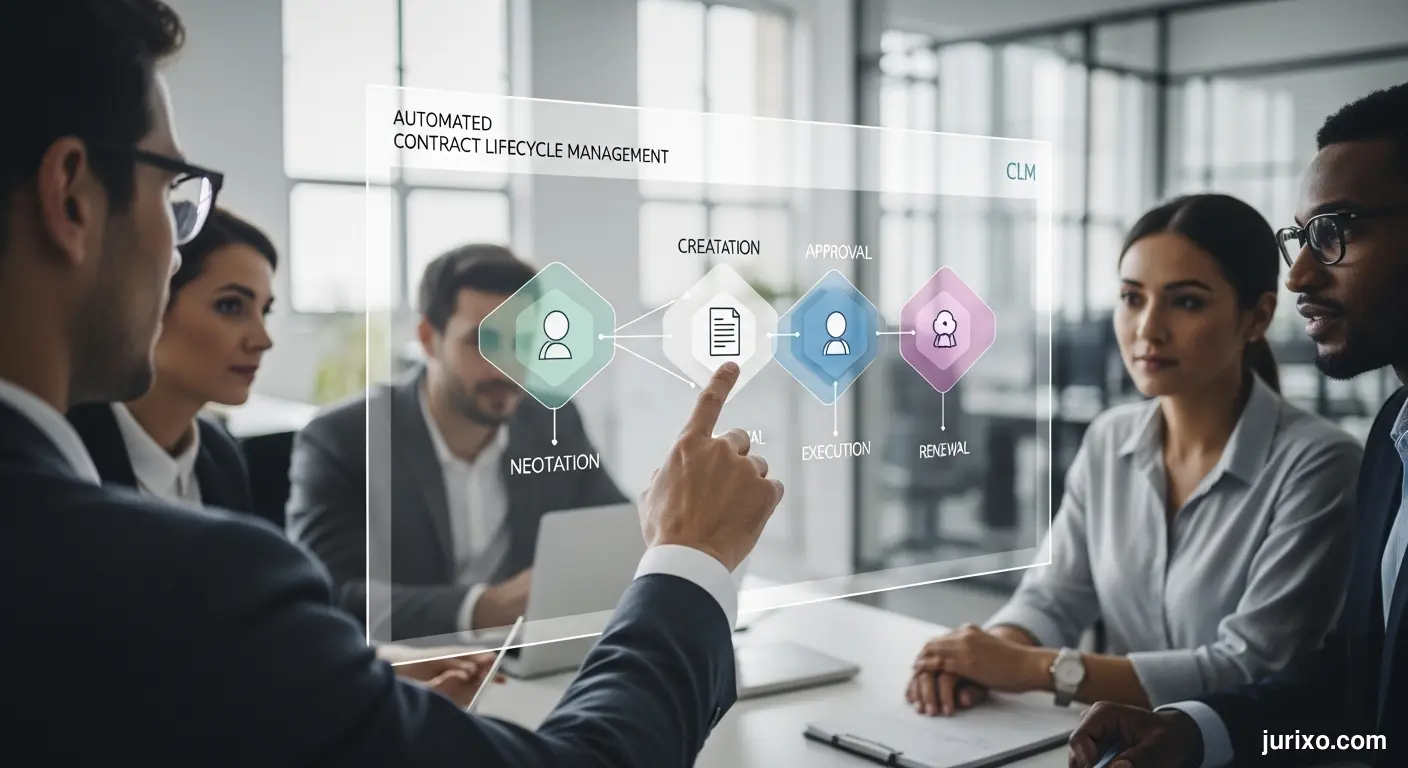
Implementing an automated Contract Lifecycle Management (CLM) system is no longer a discretionary IT project but a core strategic imperative for sustainable growth and operational resilience. It represents a fundamental shift from viewing contracts as static, administrative burdens to treating them as dynamic, data-rich assets that can be optimized for maximum value and minimum risk. This transformation requires more than technology; it demands a strategic vision from the C-suite to re-architect the way the enterprise engages with its most foundational commitments.
This comprehensive analysis, prepared by the senior advisors at Jurixo, provides a strategic framework for enterprise leaders considering the adoption of automated CLM. We will deconstruct the lifecycle, outline the architectural pillars of an effective system, quantify the strategic value beyond simple cost savings, and provide a pragmatic roadmap for successful implementation.
Deconstructing the Contract Lifecycle: From Chaos to Control
The traditional, manual contract lifecycle is a landscape fraught with inefficiency and hidden risk. Each stage presents a potential point of failure, value leakage, or compliance breach. Understanding these vulnerabilities is the first step toward appreciating the transformative power of automation.
The Anatomy of Manual Inefficiency
- Request & Intake: Business users initiate contract requests via email or informal channels. Lacking standardized forms, requests are often incomplete, requiring extensive back-and-forth with the legal team, delaying the start of critical business activities.
- Drafting & Authoring: Legal teams often start from scratch or hunt for the "last best version" of a similar agreement. This process is slow and introduces the risk of using outdated clauses, inconsistent language, or unapproved terms.
- Negotiation & Redlining: This stage devolves into a confusing exchange of Word documents with tracked changes. Version control becomes a nightmare ("Final_v3_USE_THIS_ONE.docx"), making it nearly impossible to maintain a clear audit trail of negotiated changes and approvals.
- Approval & Signature: Internal approval workflows are managed through email chains, which are difficult to track and audit. Obtaining physical or disparate e-signatures further extends timelines, delaying revenue recognition or project commencement.
- Execution & Storage: Signed contracts are often stored in a variety of locations: shared drives, local hard drives, email inboxes, or even physical filing cabinets. This fragmentation makes it impossible to gain a holistic view of the company's rights and obligations.
- Post-Execution Management: This is where the most significant value is lost. Without automated alerts, key dates like renewals, price adjustments, or termination notices are frequently missed. Tracking compliance with complex obligations (e.g., service level agreements, reporting requirements) is a manual, resource-intensive, and often neglected task.
According to research from World Commerce & Contracting, poor contract management can lead to value erosion equivalent to 9% of annual revenue. This is not a rounding error; it is a substantial financial drain directly attributable to operational deficiencies in the contracting process. Automated CLM is the primary mechanism to staunch this bleeding.

The Architectural Pillars of Enterprise-Grade CLM
An effective enterprise CLM platform is not a single piece of software but an integrated system built on several core architectural pillars. When evaluating solutions, leadership must look beyond surface-level features and assess the robustness of this underlying architecture.
Pillar 1: The Centralized, Intelligent Repository
The foundation of any CLM system is a single, secure, and searchable repository for all contracts. This is the "single source of truth."
- Unified Access: Consolidates all agreements—sales, procurement, NDAs, HR, real estate, etc.—into one platform.
- Metadata Extraction: Modern CLM uses AI to automatically parse legacy and new contracts, extracting key metadata such as parties, effective dates, renewal terms, liability caps, and governing law.
- Granular Search: Enables users to search not just by contract title but by the full text of the document and any associated metadata, allowing for rapid risk assessment and portfolio analysis.
Pillar 2: Dynamic Workflow Automation
This pillar transforms the static process into a dynamic, automated one.
- Intake Forms: Standardized, conditional forms ensure that all necessary information is captured upfront before a request is routed to legal.
- Clause Libraries & Templates: Pre-approved clause libraries and contract templates empower business users to self-serve on low-risk agreements (like standard NDAs) while ensuring legal compliance.
- Automated Approval Routing: Workflows automatically route contracts to the correct stakeholders (e.g., Finance for payment terms, IT Security for data processing addendums) based on pre-defined rules, creating a complete and auditable approval history.
Pillar 3: AI-Powered Analytics and Risk Scoring
This is where CLM evolves from an operational tool to a strategic intelligence engine.
- Risk Analysis: AI algorithms can review third-party paper and compare it against the company's standard playbook, flagging non-standard or high-risk clauses for legal review.
- Performance Monitoring: The system tracks performance against contractual obligations (e.g., SLAs in a vendor contract, volume discounts in a sales agreement) and alerts stakeholders to potential breaches.
- Portfolio-Level Insights: Dashboards provide a C-suite view of the entire contract portfolio, enabling analysis of risk concentration, revenue forecasts based on contract value, and upcoming renewal pipelines.
Pillar 4: Seamless Enterprise Integration
A CLM system cannot operate in a vacuum. Its value is magnified exponentially when it is integrated with other core enterprise systems.
- CRM Integration (e.g., Salesforce): Links sales contracts directly to customer accounts, providing sales teams with visibility into contractual terms and streamlining the quote-to-cash cycle.
- ERP Integration (e.g., SAP, Oracle): Connects procurement contracts to financial systems, automating procure-to-pay processes and ensuring that payments align with negotiated terms.
- E-Signature Integration (e.g., DocuSign, Adobe Sign): Creates a frictionless, end-to-end digital process from final approval to legally binding execution.
Quantifying the ROI: Beyond Cost Savings to Strategic Value Creation
The business case for CLM is often centered on efficiency gains and legal department cost savings. While these are significant, the true ROI is realized through strategic value creation across the entire enterprise. CFOs and CEOs should focus on these higher-order benefits.
Strategic Financial Impact
- Accelerated Revenue Recognition: By shortening negotiation and approval cycles, CLM directly reduces the time from a verbal "yes" to a signed contract, accelerating the quote-to-cash cycle and improving cash flow.
- Maximized Revenue Capture: Automated tracking of price escalators, volume discounts, and other commercial terms ensures that all entitled revenue is billed and collected.
- Optimized Spend Management: On the procurement side, CLM provides complete visibility into vendor contracts, enabling better negotiation of renewals, consolidation of spend, and elimination of maverick purchasing.
Proactive Risk and Compliance Mitigation
- Regulatory Adherence: A CLM system provides a complete, auditable record of compliance with regulations like the Sarbanes-Oxley Act (SOX), which requires stringent controls over financial reporting processes. As noted by the U.S. Securities and Exchange Commission, robust internal controls are fundamental to market confidence, and CLM provides a clear control mechanism over the contractual obligations that underpin financial statements.
- Reduced Contractual Risk: By standardizing language and flagging deviations, CLM reduces exposure to unfavorable terms related to liability, indemnity, and warranties.
- Enhanced Data Security: Centralizing contracts in a secure, access-controlled environment is a critical step in protecting sensitive corporate information. This is particularly vital when dealing with cloud-based systems, where leaders must focus on ensuring robust data sovereignty and security to meet global compliance standards.
Enhanced Operational Agility
- Faster Business Cycles: By removing the legal bottleneck, CLM empowers the entire organization to move faster—launching new products, onboarding new suppliers, and entering new markets with greater velocity.
- Improved Cross-Functional Collaboration: A CLM platform serves as a common ground for Legal, Sales, Finance, and Procurement, breaking down silos and fostering a more holistic approach to managing commercial relationships.
- Data-Driven Decision Making: The analytics derived from a CLM system provide leadership with unprecedented insight into commercial performance and risk exposure, enabling more informed strategic planning.

The Implementation Roadmap: A Phased Approach to Transformation
Deploying an enterprise CLM system is a significant change management initiative. A "big bang" approach is often doomed to fail. We recommend a phased, strategic roadmap that builds momentum and demonstrates value at each stage.
Phase 1: Assessment and Strategy (Months 1-3)
- Process Mapping: Convene a cross-functional team to map the current state of your contracting processes for different contract types (e.g., sales vs. procurement). Identify key pain points, bottlenecks, and risks.
- Define Success Metrics: Establish clear, quantifiable objectives. What are you trying to achieve? (e.g., "Reduce average sales contract cycle time by 30%," "Automate 90% of NDA creation," "Identify all contracts with non-standard liability clauses.").
- Technology & Vendor Evaluation: Based on your strategic goals, evaluate CLM vendors. Focus on their architectural strengths, integration capabilities, AI maturity, and experience in your industry. Avoid being swayed by flashy but superficial features.
Phase 2: Foundational Deployment (Months 4-9)
- Pilot Program: Start with a single, high-impact use case. A common and effective starting point is the standard Non-Disclosure Agreement (NDA) process or a specific type of sales contract.
- Repository Consolidation: Begin the process of migrating existing contracts into the new central repository. This can be a significant undertaking; prioritize active and high-value contracts first. Use the vendor's AI extraction tools to automate metadata tagging.
- Template and Workflow Configuration: Work with the vendor and your legal team to configure the initial set of contract templates and approval workflows for your pilot group.
Phase 3: Enterprise Rollout and Expansion (Months 10-18)
- Iterative Expansion: Based on the successes and learnings from the pilot, begin rolling out the CLM system to other departments and contract types in a phased manner.
- Integration Development: Deepen the integrations with your CRM and ERP systems to unlock end-to-end process automation.
- Change Management & Training: This is critical. Develop a comprehensive communication and training plan. Emphasize the "what's in it for me" for different user groups (e.g., "Sales can close deals faster," "Procurement gets better visibility on spend").
Phase 4: Optimization and Strategic Intelligence (Month 19+)
- Advanced Analytics: With a critical mass of data in the system, begin leveraging the advanced analytics capabilities to identify trends, optimize your contract playbook, and provide strategic insights to leadership.
- Continuous Improvement: The CLM system is not a "set it and forget it" tool. Continuously gather user feedback and refine workflows and templates to adapt to changing business needs.
Generative AI: The New Frontier in CLM
The emergence of powerful Generative AI models is poised to trigger the next paradigm shift in Contract Lifecycle Management. While earlier AI focused on analysis and extraction, GenAI is capable of creation and synthesis, offering profound implications for legal and business teams.
Instead of just flagging a risky clause, a GenAI-powered CLM can suggest a revised version based on the company's playbook and the specific context of the negotiation. It can generate a first draft of a complex agreement based on a simple set of business parameters, dramatically reducing the initial drafting time for legal counsel. This allows lawyers to transition from scribes to strategists, focusing their expertise on high-stakes negotiation and complex risk assessment rather than routine drafting. The Financial Times has noted how this technology is already reshaping professional services, and the legal field is at the forefront of this transformation.
However, this power comes with new responsibilities. Enterprises must establish strong governance to manage the outputs of these models, ensuring accuracy, consistency, and alignment with corporate risk tolerance. Furthermore, as AI generates novel contractual language, companies must have a clear strategy for protecting the intellectual property embedded within AI-generated contract clauses and other outputs, treating them as valuable corporate assets.

Jurixo's Strategic Perspective: Integrating CLM into Corporate Governance
At Jurixo, we advise our clients that the successful adoption of automated CLM is, at its core, an exercise in strengthening corporate governance. A well-implemented CLM system provides the board and executive leadership with an unparalleled, real-time lens into the commercial health and risk posture of the organization.
It operationalizes policy, ensuring that the risk tolerances defined in the boardroom are systematically enforced in every single contract the company signs. It provides the audit trail and data integrity necessary to give the Audit Committee confidence in the company's financial controls and public disclosures. It transforms the General Counsel's office from a reactive cost center into a proactive, data-driven strategic partner to the business.
Ultimately, mastering the contract lifecycle is about mastering the fundamentals of the business itself. By transforming contracts from static legal artifacts into dynamic, intelligent assets, enterprises can unlock new levels of agility, efficiency, and strategic insight, building a more resilient and profitable future.
Frequently Asked Questions (FAQ)
1. Our current manual process 'works.' Why is the significant investment in an enterprise CLM justified now?
The term 'works' often masks immense hidden costs in the form of value leakage, operational drag, and unmitigated risk. While your team may be successfully executing contracts, you are likely losing millions in missed revenue opportunities, suboptimal procurement terms, and slow business cycles. The justification is not merely about making the legal team more efficient; it's a strategic investment in accelerating revenue, strengthening compliance (like SOX), and providing the C-suite with the data-driven visibility needed to navigate an increasingly complex business environment. The question is not whether you can afford to invest in CLM, but whether you can afford to continue absorbing the 9% revenue leakage that poor contract management causes.
2. What is the single biggest implementation risk we should anticipate, and how do we mitigate it?
The single biggest risk is not technology failure, but poor user adoption driven by a failure in change management. Employees are accustomed to their current (albeit inefficient) processes. To mitigate this, implementation cannot be an IT-led project; it must be a business-led transformation sponsored by the C-suite. Mitigation involves a three-pronged approach: 1) Clear Communication: Articulate the "what's in it for me" for each user group—faster deal cycles for sales, better spend control for procurement. 2) Phased Rollout: Start with a pilot group to create internal champions and success stories before a broad rollout. 3) Executive Mandate: Leadership must signal that this is not optional. The old way of emailing contracts or storing them on local drives must be decommissioned.
3. How does CLM integrate with our existing core systems like our ERP and CRM, and why is this critical?
Integration is the key to unlocking exponential ROI. A standalone CLM is a better filing cabinet; an integrated CLM is a central nervous system for your commercial operations. Integration with your CRM (e.g., Salesforce) allows your sales team to generate contracts and see contractual data directly within the customer account, streamlining the quote-to-cash process. Integration with your ERP (e.g., SAP) connects procurement contracts to financial data, ensuring you only pay what you agreed to pay and automating vendor management. This bi-directional data flow is critical because it eliminates manual data entry, reduces errors, and provides a single, holistic view of a customer or vendor relationship across the entire lifecycle.
4. We are concerned about data security. How can we be sure that centralizing our most sensitive documents into one cloud platform is secure?
This is a valid and critical concern. Enterprise-grade CLM platforms are built with security as a primary design principle, often exceeding the security of a fragmented system of shared drives and email servers. Key security features to demand from a vendor include: SOC 2 Type II and ISO 27001 certifications, robust data encryption (both in transit and at rest), granular role-based access controls (ensuring users only see contracts relevant to them), and a complete, immutable audit trail of every action taken on a document. It is also essential to ensure the platform can meet data residency requirements, a core component of cloud computing compliance and data sovereignty. Centralization, when done correctly, enhances security by providing a single point of control and monitoring.
5. How will the rise of Generative AI within CLM platforms impact our legal team's headcount and required skill set?
Generative AI will not replace your legal team, but it will fundamentally reshape its function. It will automate the low-value, repetitive tasks that currently consume a significant portion of their time, such as drafting standard agreements and conducting initial reviews of third-party paper. This will not necessarily lead to headcount reduction but rather to a shift in focus. The demand will be for "legal strategists" rather than "legal scribes." Your lawyers will spend less time on routine drafting and more time on high-value activities: complex negotiation strategy, novel risk analysis, and providing proactive counsel to the business. The required skill set will evolve to include a degree of tech-savviness and the ability to effectively supervise, validate, and refine AI-generated outputs.
Advertisement
Last Updated: