
U.S.-Iran war 'tax' begins to hit American businesses and consumers: Complete Corporate Guide
Heightened geopolitical tensions act as a metaphorical 'tax' on the economy. This guide provides a corporate playbook for navigating the financial and regulatory impacts on American businesses.

Advertisement
While no literal "U.S.-Iran war tax" has been enacted by the Internal Revenue Service (IRS), the escalating geopolitical tensions between the nations impose a very real, albeit indirect, 'tax' on American businesses and consumers. This "geopolitical tax" manifests as a complex web of increased costs, heightened risks, and significant operational hurdles. From volatile energy prices and disrupted supply chains to a labyrinth of international sanctions and complex tax implications, the financial fallout requires proactive and strategic management. This comprehensive guide, grounded in current U.S. regulatory frameworks, serves as an authoritative playbook for corporate leaders, finance executives, and wealth managers to navigate this challenging landscape.
The 'Geopolitical Tax': Deconstructing the Economic Impact
The term 'geopolitical tax' refers not to a government levy, but to the cascading economic consequences of international conflict. For U.S. businesses, these are tangible costs that erode margins, complicate operations, and demand significant management attention. The primary mechanisms of this 'tax' are energy market instability, supply chain disruptions, and broad inflationary pressures.
Energy Price Shocks and the Strait of Hormuz
The Strait of Hormuz is one ofthe world's most critical oil transit chokepoints, with about 20-30% of global oil and 20% of Liquefied Natural Gas (LNG) passing through it. Any military escalation or perceived threat in this narrow passage can lead to an immediate and dramatic spike in energy prices. A conflict could effectively halt roughly 20% of the world's petroleum flow. This surge directly increases operational costs for nearly every business through:
- Higher Transportation Costs: Fuel is a primary expense for logistics, from trucking fleets to air freight. Rising diesel and jet fuel prices are passed down through the supply chain, increasing the cost of goods.
- Increased Manufacturing Expenses: Energy-intensive industries like chemicals, plastics, and heavy manufacturing face immediate pressure on their production costs.
- Elevated Utility Bills: Businesses of all sizes experience higher electricity and heating costs, squeezing budgets that could otherwise be allocated to growth or payroll.
A disruption to the Strait of Hormuz would not only affect oil shipments but could also render the majority of the world's spare crude oil production capacity unavailable, exacerbating the market impact.
Global Supply Chain Disruption
Beyond energy, the threat of conflict creates chaos in global supply chains. Modern "just-in-time" inventory models are highly vulnerable to such disruptions. Companies must prepare for:
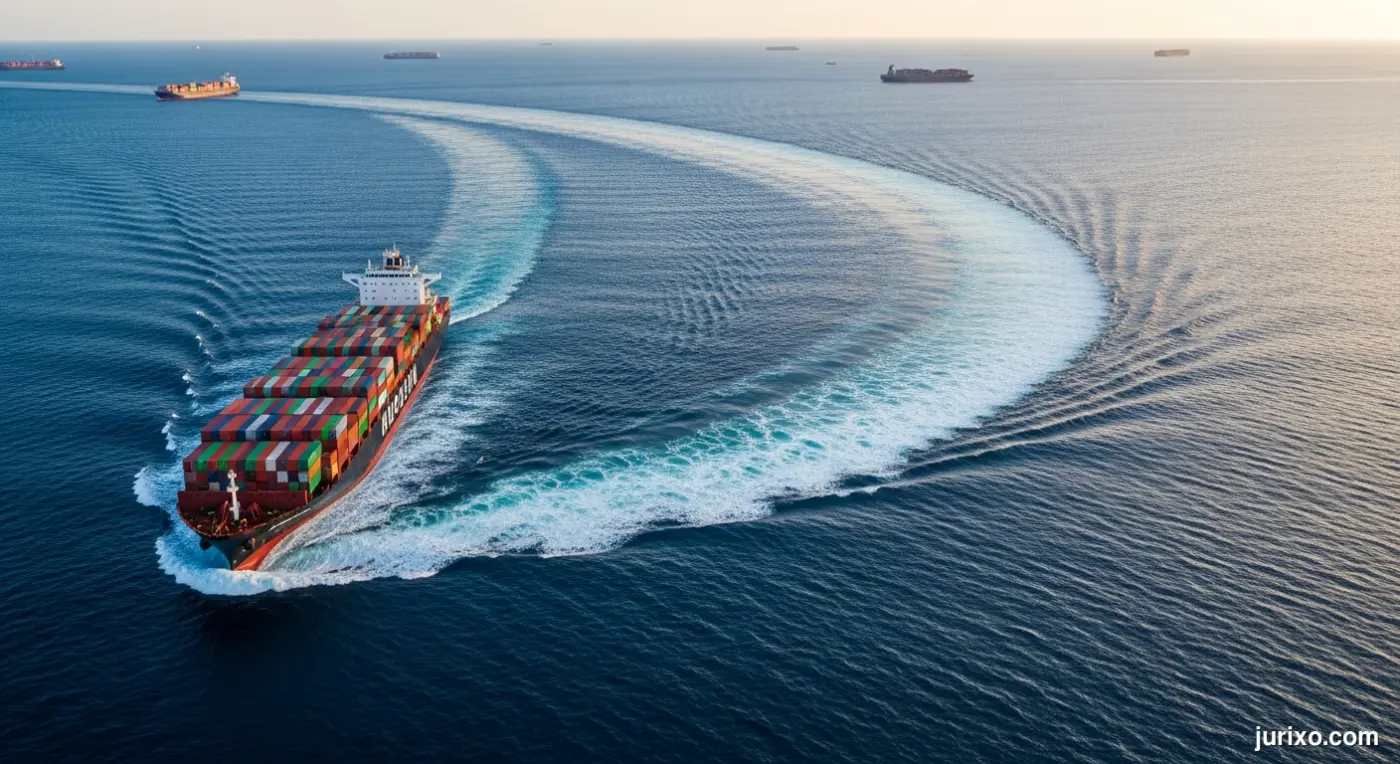
- Shipping Delays and Rerouting: Vessels may be forced to take longer, more expensive routes to avoid conflict zones, such as the journey around the Cape of Good Hope, which can add thousands of nautical miles and weeks to transit times.
- Soaring Insurance Premiums: War Risk Insurance premiums for vessels operating in or near the Persian Gulf can skyrocket, adding a significant cost layer to shipping.
- Component and Raw Material Shortages: Businesses relying on suppliers in the Middle East or those whose goods transit through the region face the risk of production halts. This extends beyond oil to include critical materials like petrochemicals and fertilizers, impacting sectors from agriculture to manufacturing.
Navigating the Regulatory Minefield: Sanctions and Compliance
In response to geopolitical threats, the U.S. government wields powerful economic tools, primarily through the Department of the Treasury's Office of Foreign Assets Control (OFAC) and the Department of Commerce's Bureau of Industry and Security (BIS). Navigating this regulatory landscape is paramount to avoiding severe penalties.
The Office of Foreign Assets Control (OFAC)
OFAC administers and enforces economic and trade sanctions based on U.S. foreign policy and national security goals. Since the Iranian Revolution in 1979, the U.S. has maintained a complex and evolving sanctions program against Iran. In a conflict scenario, these sanctions would intensify, likely targeting broad sectors of the Iranian economy and any person or entity, regardless of nationality, found to be supporting the regime.
For U.S. businesses, this means:
- Extreme Due Diligence: Companies must rigorously screen all customers, suppliers, and partners against OFAC’s Specially Designated Nationals and Blocked Persons (SDN) List. Transactions with any listed individual, entity, or vessel are strictly prohibited.
- Secondary Sanctions Risk: Non-U.S. companies that engage in certain transactions with Iran can be subject to U.S. secondary sanctions, cutting them off from the U.S. financial system. U.S. businesses must ensure their foreign partners are compliant to avoid being implicated in violations.
- Constant Monitoring: The sanctions landscape is dynamic. OFAC frequently updates its lists and guidance, requiring companies to have robust, continuous monitoring systems in place. Businesses can sign up for email updates directly from the agency to stay informed.
The Bureau of Industry and Security (BIS)
BIS controls the export and reexport of most commercial goods, software, and technology under the Export Administration Regulations (EAR). The EAR imposes strict licensing requirements for a wide range of items destined for Iran, aiming to prevent the country from acquiring technologies that could support its military or other destabilizing activities.
Key considerations under the EAR include:
- Broad Controls: A license from BIS is required for most items on the Commerce Control List (CCL) to be exported or reexported to Iran.
- Foreign Direct Product Rule (FDPR): This rule expands U.S. jurisdiction to cover certain foreign-produced items that are the direct product of U.S. technology or software, further restricting Iran's access to critical components.
- End-User and End-Use Controls: Even if an item doesn't typically require a license, one may be required if the exporter knows or has reason to know the item is intended for a prohibited end-user (like the Iranian government) or end-use (like involvement in weapons development).
Violations of OFAC and BIS regulations can result in substantial civil and criminal penalties, including millions of dollars in fines, imprisonment for individuals, and the loss of export privileges.
Corporate Finance and Risk Management in Times of Conflict
The financial risks stemming from geopolitical conflict are multifaceted, requiring a strategic response from a company's finance and legal teams. Key areas of focus include insurance, financial hedging, and public disclosures.
Reviewing Insurance Coverage
Standard business insurance policies often contain exclusions for losses arising from war, civil unrest, or government seizure of assets. It is critical for companies with international exposure to review and potentially procure specialized coverage:
- Political Risk Insurance (PRI): This can protect against losses from events like expropriation, currency inconvertibility, and political violence.
- Trade Credit Insurance: This insures accounts receivable, protecting a business if a customer is unable to pay due to political events or insolvency.
- War Risk Insurance: Primarily for the shipping and aviation industries, this covers damage and losses due to war, strikes, and related perils.
Financial Hedging Strategies
Volatility in commodity and currency markets is a hallmark of geopolitical instability. Corporate treasurers can use financial instruments to mitigate some of this risk:
- Commodity Futures and Options: Companies with significant exposure to oil, gas, or other raw material price fluctuations can use futures contracts to lock in prices or options to hedge against adverse price movements.
- Currency Hedging: A conflict can cause wild swings in currency exchange rates. Forward contracts and currency options can help protect the U.S. dollar value of foreign revenues and assets.
SEC Disclosure Requirements
For public companies, transparent communication of risk is a legal obligation. The U.S. Securities and Exchange Commission (SEC) requires companies to disclose material risks that could affect their business. Geopolitical instability is a significant risk factor.
Under Regulation S-K, companies must provide detailed disclosures in their annual (10-K) and quarterly (10-Q) reports about how events like a potential U.S.-Iran conflict could impact their:
- Operations and supply chains.
- Financial condition and liquidity.
- Cybersecurity posture, given the increased risk of state-sponsored cyberattacks.
The SEC has explicitly issued guidance reminding companies of their disclosure obligations related to geopolitical events. Failure to provide adequate and specific disclosures can lead to shareholder lawsuits and SEC enforcement actions. Boilerplate language is insufficient; disclosures must be tailored to the company's specific exposure.

Tax Implications for U.S. Corporations
While there is no specific "war tax," the economic fallout from a conflict has significant implications under existing U.S. tax law, particularly for multinational corporations. The primary areas of concern are foreign tax credits and the treatment of losses.
Foreign Tax Credits (FTC)
The U.S. foreign tax credit system is designed to prevent double taxation on income earned abroad. A U.S. company can generally claim a credit for income taxes paid to a foreign government. However, geopolitical turmoil can complicate this.
- Creditability Issues: The IRS has complex rules for determining whether a foreign levy qualifies as a creditable "income tax." Changes in a foreign country's tax regime during a crisis could render certain taxes non-creditable.
- Limitation Calculations: The amount of FTC a company can claim is subject to limitations based on the amount of its foreign-source income. Disruptions that shift the geographic source of income (e.g., rerouting sales or services) can impact these calculations.
- Carryovers: Unused foreign tax credits can generally be carried back one year and forward for ten years, but their future usability depends on generating sufficient foreign-source income. A prolonged conflict could jeopardize a company's ability to utilize these valuable tax assets.
Losses on Foreign Assets
Businesses with assets located in a conflict zone face the risk of destruction, seizure, or sudden worthlessness. The Internal Revenue Code (IRC) provides rules for deducting such losses, but they are specific.
- Casualty and Theft Losses: IRC Section 165 allows for deductions for losses arising from "fire, storm, shipwreck, or other casualty, or from theft." A loss due to military action could potentially qualify as a casualty loss. The loss is generally deductible in the year it is sustained.
- Worthless Securities: If a U.S. parent company owns a foreign subsidiary whose assets are destroyed or seized, making its stock worthless, a worthless stock deduction may be available under IRC Section 165(g). This is treated as a capital loss.
- Disaster Loss Election: In some cases, if a loss occurs in a federally declared disaster area, a taxpayer may elect to deduct the loss in the tax year prior to the year the disaster occurred, potentially generating a quick tax refund. However, the applicability of this provision to a foreign conflict zone would depend on specific presidential declarations.
- Reporting Requirements: Significant losses, particularly those exceeding certain monetary thresholds under Section 165, may be classified as "reportable transactions" requiring disclosure to the IRS on Form 8886.

The Consumer Impact: Higher Prices and Uncertainty
The corporate-level challenges described above inevitably translate into direct costs for American consumers. The 'geopolitical tax' is ultimately paid at the gas pump and the grocery store.
- Higher Fuel and Energy Prices: The most immediate and visible impact is higher gasoline prices, which strain household budgets. This is followed by increased home heating oil and natural gas costs.
- Inflation on Goods and Services: As businesses face higher transportation, manufacturing, and raw material costs, they pass these on to consumers in the form of higher prices for everyday goods, from food to electronics.
- Travel Costs: Airlines, facing massive jet fuel price hikes, respond by increasing ticket prices and fees.
- Market Volatility: Geopolitical uncertainty spooks financial markets, leading to volatility that can impact 401(k)s and other retirement savings, creating economic anxiety even for those not directly affected by price hikes.
Conclusion: Preparedness is the Only Defense
Heightened tensions between the U.S. and Iran create a significant, multi-faceted 'tax' on the American economy, impacting both businesses and consumers. This is not a formal tax issued by the government, but a de facto financial burden born from instability and risk. For corporate leaders, the challenge is to move from a reactive crisis-response mode to a proactive state of preparedness.
By stress-testing supply chains, enhancing regulatory compliance programs, reviewing financial risk management strategies, and understanding the nuances of U.S. tax law, businesses can build resilience. While no company can fully insulate itself from the shockwaves of global conflict, those that understand the channels of impact and prepare strategically will be best positioned to protect their assets, serve their customers, and navigate the turbulent waters ahead.
Frequently Asked Questions (FAQ)
What is the "U.S.-Iran war tax"?
This is not a literal tax levied by the IRS. It is a metaphorical term describing the collection of indirect costs that American businesses and consumers must bear due to geopolitical conflict. These "taxes" include higher energy and transportation costs, supply chain disruption expenses, increased compliance and insurance premiums, and the financial impact of market volatility.
Which U.S. agency is most important for businesses to monitor during a conflict with Iran?
The U.S. Department of the Treasury's Office of Foreign Assets Control (OFAC) is the most critical agency to monitor. OFAC administers and enforces U.S. economic and trade sanctions. During a conflict, it would be responsible for issuing, updating, and enforcing sanctions that could impact a wide range of business activities, and violations carry severe penalties.
How can a business protect itself from supply chain disruptions?
Businesses can enhance resilience by diversifying their supply chains to reduce dependence on any single country or route. This includes identifying and vetting alternative suppliers, increasing inventory of critical components, mapping out Tier 1 and Tier 2 supplier dependencies, and exploring near-shoring or re-shoring of key production processes.
Are there specific insurance policies for war-related business risks?
Yes. Standard commercial policies often exclude war. Businesses with international exposure should investigate specialized policies such as Political Risk Insurance (which can cover asset seizure or expropriation), Trade Credit Insurance (protecting against customer non-payment due to political events), and War Risk Insurance (for shipping and aviation).
How does geopolitical conflict affect my personal 401(k)?
Geopolitical conflict creates significant uncertainty, which often leads to stock market volatility. This can cause the value of your 401(k) or other investment accounts to fluctuate, potentially declining in the short term. Furthermore, the inflationary effects of conflict, such as higher oil prices, can erode the long-term purchasing power of your savings. It is advisable to maintain a long-term perspective and consult with a financial advisor rather than making reactive decisions based on short-term market movements.
Advertisement
Last Updated: