
Commercial General Liability (CGL) vs. Umbrella Policies
An elite guide on corporate best practices.
Advertisement
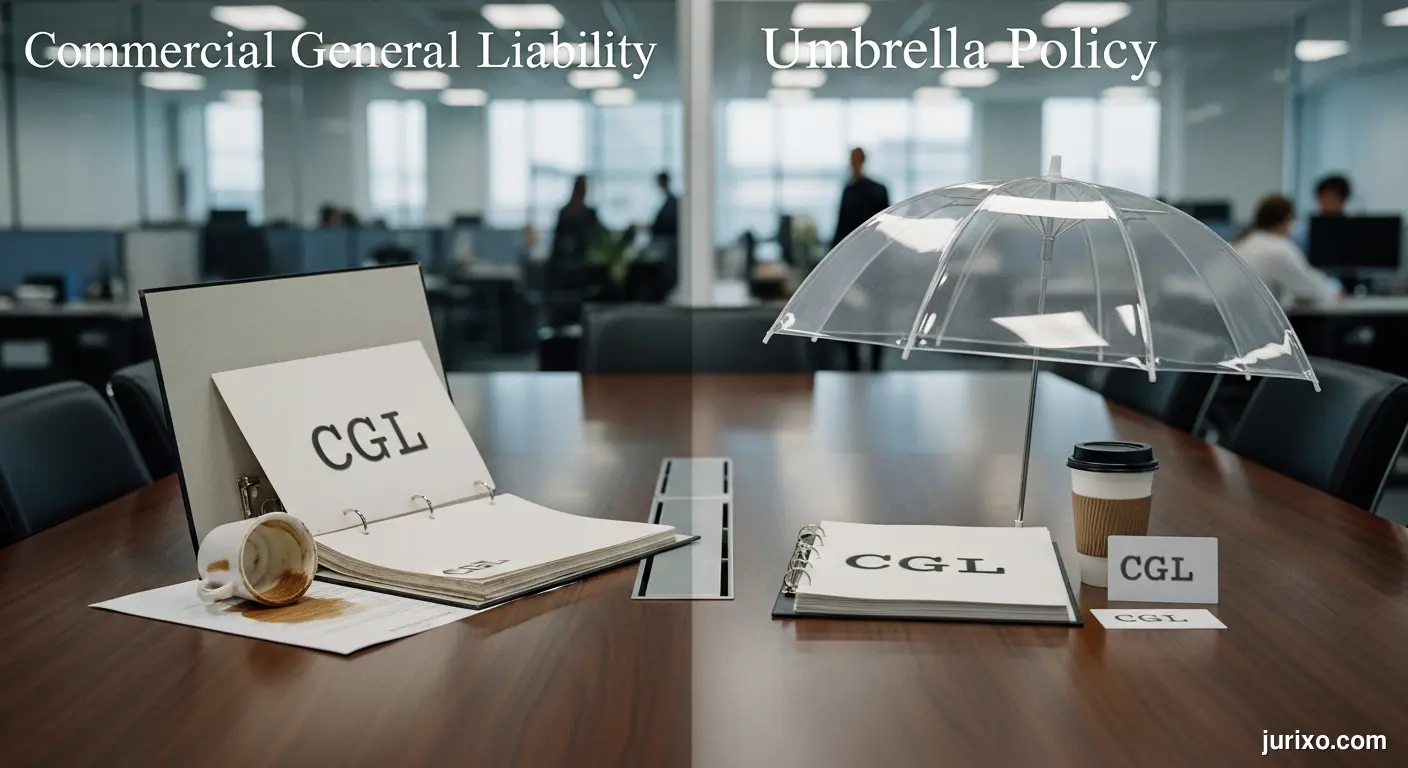
In the modern enterprise, risk is not merely a variable to be managed; it is a dynamic and ever-present force that must be strategically governed. For the C-suite and the board, the architecture of the corporate insurance program is a direct reflection of this governance. It is not an administrative task delegated to a procurement department but a core component of balance sheet protection and strategic resilience. Within this framework, no distinction is more fundamental—yet more frequently misunderstood at a strategic level—than the relationship between a Commercial General Liability (CGL) policy and a Commercial Umbrella policy.
Too often, these instruments are viewed as simple, interchangeable layers of financial protection. This perspective is dangerously myopic. A CGL policy is the foundational shield, the first line of defense against common third-party claims. An Umbrella policy is the strategic reinforcement, a sophisticated tool designed not only to amplify that defense but also to fill critical gaps in its structure. Understanding their distinct roles, their intricate interplay, and their collective limitations is paramount for any organization seeking to insulate itself from the catastrophic financial impact of a "black swan" liability event. This analysis moves beyond rudimentary definitions to provide a strategic blueprint for senior leadership, dissecting how these policies function as integral components of a robust corporate risk mitigation strategy.
Deconstructing Commercial General Liability (CGL): The Foundational Shield
A Commercial General Liability policy is the bedrock of any corporate insurance program. Its primary mandate is to defend and indemnify the insured organization against third-party claims alleging bodily injury, property damage, or personal and advertising injury. It is the frontline defense for the myriad risks inherent in daily commercial operations, from a visitor slip-and-fall at a corporate headquarters to a product defect claim.
To truly grasp its function, one must dissect its core coverage grants. The standard ISO (Insurance Services Office) CGL form provides three principal insuring agreements:
- Coverage A: Bodily Injury and Property Damage Liability: This is the most frequently triggered section. It covers the insured's legal liability for physical harm to a person or damage to tangible property caused by an "occurrence"—typically defined as an accident, including continuous or repeated exposure to substantially the same general harmful conditions. This is the coverage that responds to premises liability, products-completed operations liability, and other operational exposures.
- Coverage B: Personal and Advertising Injury Liability: This grant addresses a different category of torts, often related to reputational or intellectual harm. It covers liability arising from offenses such as libel, slander, invasion of privacy, copyright infringement in your advertisement, and misappropriation of advertising ideas. In an age of digital marketing and intense brand competition, the strategic importance of this coverage cannot be overstated.
- Coverage C: Medical Payments: This is a no-fault coverage designed for goodwill. It pays the reasonable medical expenses of a person injured on the insured's premises or due to its operations, regardless of legal liability. The limits are typically low (e.g., $5,000 or $10,000 per person) and are intended to quickly resolve minor incidents and preempt larger lawsuits.
The Inherent Limitations of the CGL Policy
While foundational, the CGL policy is far from absolute. Its effectiveness is constrained by two primary factors: policy limits and exclusions.
1. Policy Limits: Every CGL policy contains several limits of insurance, which act as the absolute cap on the insurer's potential payout for covered claims. These typically include: * Each Occurrence Limit: The maximum amount the insurer will pay for all damages under Coverage A and medical expenses under Coverage C arising out of a single occurrence. * General Aggregate Limit: The absolute maximum the insurer will pay in total during the policy period for all claims, except those related to products-completed operations. * Products-Completed Operations Aggregate Limit: A separate aggregate limit for liability arising from the insured's products or completed work after they have left the insured's control. * Personal and Advertising Injury Limit: The maximum paid for all damages under Coverage B sustained by any one person or organization.
For a mid-sized to large enterprise, a standard CGL limit of $1 million per occurrence and $2 million in the aggregate is common. In today's litigious environment, where jury verdicts can easily reach eight or nine figures, it is self-evident that these limits are wholly insufficient to cover a catastrophic loss. This is the primary, and most obvious, reason for the existence of an Umbrella policy.
2. Exclusions: Just as critical as what a CGL policy covers is what it explicitly excludes. Standard CGL forms contain a long list of exclusions designed to narrow the scope of coverage and eliminate risks that are either uninsurable, better covered elsewhere, or require specialized underwriting. Key exclusions often include: * Professional Services (Errors & Omissions): The CGL expressly excludes liability arising from the rendering of or failure to render professional services. This risk must be covered by a separate Professional Liability (E&O) policy. * Cyber Liability: While some residual "silent cyber" coverage may exist, most modern CGL policies contain broad exclusions for data breaches, network security failures, and other electronic data-related risks. This necessitates a dedicated Cyber Liability policy. * Pollution: The standard pollution exclusion is notoriously broad, eliminating coverage for most claims involving the release of pollutants. Limited buy-backs are sometimes available, but significant environmental risks require a separate Environmental Impairment Liability (EIL) policy. * Auto Liability: Liability arising from the ownership, maintenance, or use of an auto is excluded and must be covered by a Business Auto Policy. * Directors and Officers (D&O) Liability: Claims against executives for wrongful acts in their managerial capacity are excluded and require a D&O policy. The interplay between D&O and other policies can be complex, especially in matters of Boardroom Disputes & Fiduciary Duties: A Resolution Guide, where the nature of the alleged wrong determines the coverage trigger.
Relying solely on a CGL policy is akin to building a fortress with robust front gates but leaving the side walls undefended and the ramparts too low. It provides a necessary, but fundamentally incomplete, defense.
The Commercial Umbrella Policy: Vertical and Horizontal Risk Mitigation
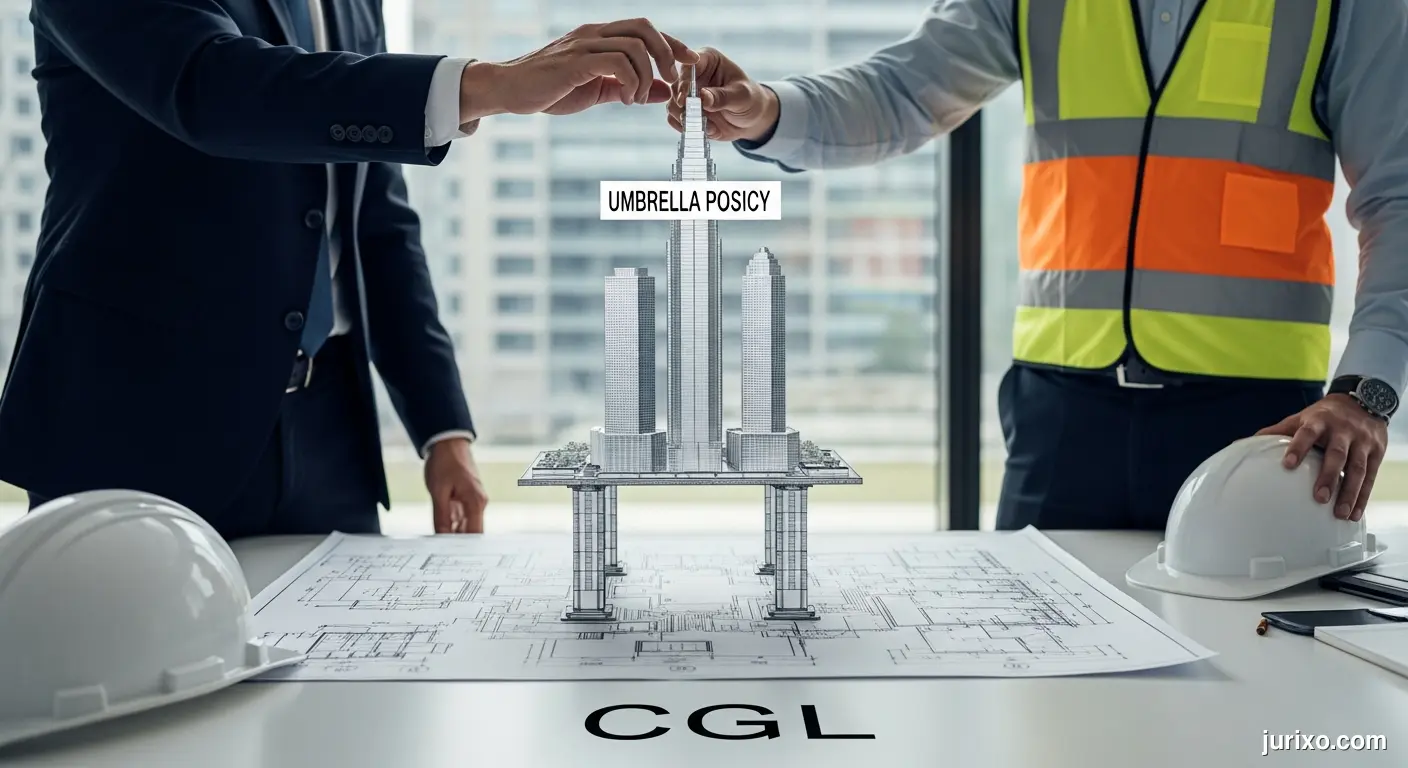
If the CGL is the foundation, the Commercial Umbrella policy is the sophisticated superstructure that provides both height and breadth to the corporate liability program. Its name is apt: it sits "over" the primary liability policies, providing a canopy of protection against catastrophic storms. An Umbrella policy serves two distinct and equally critical functions.
Function 1: Vertical Extension (Excess Liability)
The most straightforward function of an Umbrella policy is to provide additional limits. It is an excess liability policy that sits on top of the underlying CGL, Business Auto, and Employer's Liability policies.
Consider a company with a CGL policy that has a $1 million per-occurrence limit. If that company is hit with a $5 million judgment from a covered liability claim, the CGL insurer will pay its full limit of $1 million. Without further coverage, the company would be responsible for the remaining $4 million out of pocket—a potentially devastating blow to its balance sheet.
If that same company had a $10 million Umbrella policy, the risk transfer is dramatically different. The CGL insurer would still pay its $1 million. Then, the Umbrella policy would be triggered to pay the remaining $4 million. The corporation's assets are protected, and the loss is contained within its insurance program. This vertical extension of limits is the primary driver for purchasing an Umbrella policy.
Function 2: Horizontal Broadening (Drop-Down Coverage)
The more nuanced and strategically vital function of an Umbrella policy is its ability to "drop down" and provide primary coverage for losses that are not covered by the underlying policies. This occurs in two scenarios:
- Exhaustion of Underlying Aggregates: If the underlying CGL policy's general aggregate limit is exhausted by a series of smaller claims during the policy year, the Umbrella can drop down to provide first-dollar coverage for subsequent claims (subject to a self-insured retention, or SIR). This prevents a dangerous gap in coverage from opening up mid-term.
- Coverage for Claims Excluded by Underlying Policies: A true Umbrella policy often contains its own, broader insuring agreement. This means it may cover certain claims that are explicitly excluded by the underlying CGL policy. In this situation, the Umbrella "drops down" to act as the primary policy for that specific claim. The policyholder is typically required to pay a Self-Insured Retention (SIR)—a form of deductible, often in the range of $10,000 to $25,000—before the Umbrella insurer begins to pay.
This "drop-down" feature is what distinguishes a true Umbrella from a simple "Follow-Form Excess" policy, which merely provides additional limits and strictly follows the terms and exclusions of the underlying policy. The potential for broader coverage is a key point of negotiation and a significant source of value in a well-structured Umbrella policy.
The Strategic Interplay: CGL and Umbrella in a Cohesive Risk Architecture
A corporation's liability tower is not merely a stack of policies; it is an integrated system. The effectiveness of this system depends on the seamless interaction between the CGL and Umbrella layers. Senior leaders must focus on several key areas to ensure this architecture is sound.
Underlying Policy Requirements
An Umbrella policy does not exist in a vacuum. It contractually requires the insured to maintain specific underlying policies (CGL, Auto, Employer's Liability) with minimum specified limits. Failure to maintain these underlying policies and limits can be a breach of the Umbrella policy's conditions. If an underlying policy is not in place at the time of a loss, the Umbrella will not "drop down" to the ground. Instead, it will respond as if the underlying policy had been in place, forcing the corporation to pay the amount that the underlying insurer would have paid before the Umbrella contributes a single dollar.
The "Follow Form" vs. Standalone Distinction
The language of the Umbrella policy is critical. A "follow-form" excess policy is simpler: it states that it provides coverage subject to the exact same terms, conditions, and exclusions as the underlying policy it sits over. This provides certainty but no potential for broader coverage.
A true "standalone" or "manuscript" Umbrella policy has its own insuring agreement, definitions, and exclusions. This creates the potential for the valuable "drop-down" coverage discussed earlier, but it also introduces complexity. There can be inconsistencies between the Umbrella and underlying forms, potentially creating unanticipated coverage gaps. A thorough coverage analysis by legal and risk management professionals is essential to harmonize the policies and ensure the Umbrella is, at a minimum, "as broad as" the underlying CGL. According to analysis from the Insurance Information Institute, understanding these policy form differences is a primary challenge for insureds.
The Role of the Self-Insured Retention (SIR)
The SIR is the amount the insured must pay out-of-pocket before the Umbrella policy responds to a claim that is not covered by an underlying policy. It is crucial to distinguish this from a deductible. A deductible is typically part of the policy limit, whereas an SIR is paid before the policy limit is engaged. The SIR amount is a key negotiation point and should be set at a level that aligns with the corporation's risk appetite and financial capacity for self-insurance. Inadequate planning for SIR payments can lead to significant liquidity challenges during a crisis.
Advanced Considerations & Common Pitfalls for the Modern Enterprise
Moving beyond the fundamentals, senior leadership must grapple with more complex issues that can undermine an otherwise well-designed liability program.
Navigating the Minefield of Exclusions
Even broad Umbrella policies contain critical exclusions. Executives must be vigilant about how these exclusions impact their specific risk profile.
- Territorial Limits: Standard policies often limit coverage to a defined territory (e.g., the U.S., its territories, and Canada). For multinational corporations, ensuring the liability tower provides a global solution, either through a worldwide coverage endorsement or a coordinated program of local and master policies, is non-negotiable. This is a key component of building effective Geopolitical Risk Assessment Models for Multinational Enterprises.
- Professional Services: As noted, this is a standard exclusion. For companies in technology, consulting, finance, or any field providing advice for a fee, a robust and well-integrated E&O tower is just as important as the CGL/Umbrella tower.
- Mergers & Acquisitions: M&A activity presents significant liability challenges. The acquiring entity must conduct meticulous due diligence on the target's insurance history, loss runs, and potential successor liability exposures. The structure of the deal (asset vs. stock purchase) has profound implications for how past liabilities are treated, and the insurance program must be restructured post-closing to reflect the new corporate entity.
The Specter of Social Inflation
One of the most significant macro trends impacting corporate liability is "social inflation." This term, discussed frequently in publications like The Wall Street Journal, refers to the rising costs of insurance claims resulting from societal trends and legal system changes. These include growing anti-corporate sentiment, litigation funding by third parties, and a propensity for juries to award "nuclear verdicts" in the tens or hundreds of millions of dollars.
This trend directly impacts the adequacy of liability limits. A $10 million Umbrella policy that seemed sufficient five years ago may be woefully inadequate today for a company in a high-risk industry. The process of determining appropriate limits—known as "limit adequacy analysis"—must be a dynamic, data-driven exercise, not a static benchmark. It involves analyzing industry-specific verdict data, peer company limit profiles, and modeling potential worst-case loss scenarios.

Case Study: A Tale of Two Liability Scenarios
To crystallize these concepts, consider a hypothetical manufacturing company, "Innovate Corp," that produces a component used in consumer electronics.
Scenario A: Insufficient Coverage Innovate Corp carries a standard CGL policy with a $1 million per occurrence / $2 million aggregate limit. They have no Umbrella policy, deeming it an unnecessary expense. A flaw in their component leads to a widespread product recall and a class-action lawsuit alleging property damage to the finished electronic devices. The court renders a judgment against Innovate Corp for $8 million.
- Outcome: The CGL insurer pays its full occurrence limit of $1 million. Innovate Corp is forced to pay the remaining $7 million from its corporate assets. This catastrophic, unbudgeted expense triggers a liquidity crisis, forces layoffs, and severely damages shareholder value.
Scenario B: Strategic Coverage A competitor, "Synergy Tech," faces the exact same scenario. However, Synergy Tech's risk management team, in consultation with their legal advisors, had implemented a more robust program. They have the same $1 million/$2 million CGL, but it is supplemented by a $25 million standalone Umbrella policy.
- Outcome: Synergy Tech's CGL insurer pays its $1 million limit. The Umbrella insurer is then triggered and pays the remaining $7 million of the judgment. While the event is still a major operational and reputational issue, the company's balance sheet is protected. The loss is transferred to the insurers as intended, allowing the executive team to focus on operational recovery rather than financial survival. As noted by legal experts at Cornell Law School's Legal Information Institute, products liability is a domain where such high-value claims are increasingly common, making this type of layered coverage essential.
Conclusion: From Expense to Strategic Asset
The distinction between CGL and Umbrella policies is not a mere technicality for the risk management department. It is a strategic imperative for the board. A CGL policy provides the essential, non-negotiable foundation for operational liability. The Umbrella policy transforms that foundation into a fortress, providing the high-limit capacity and coverage breadth necessary to withstand the catastrophic events that can cripple or destroy an enterprise.
In an environment defined by escalating legal awards, complex global operations, and unforeseen "black swan" events, viewing insurance as a simple cost center is a path to failure. A well-structured, multi-layered liability program, anchored by a robust CGL and a high-capacity, broad-form Umbrella, is a strategic asset. It protects shareholder value, enables confident risk-taking, and provides the financial resilience necessary to navigate the turbulent waters of modern commerce. The ultimate responsibility lies with senior leadership to ensure their corporate shield is not just present, but impenetrable.
Frequently Asked Questions (FAQ)
1. Our broker says our Umbrella is "follow-form." Is that a problem? Not necessarily, but it requires strategic understanding. A "follow-form" excess policy provides simplicity and certainty, as its coverage mirrors the underlying CGL. The primary drawback is that you gain no additional coverage breadth; any gaps or restrictive exclusions in your CGL are carried directly up through your entire liability tower. A "standalone" Umbrella offers the potential to fill those gaps ("drop-down" coverage), but introduces complexity and potential inconsistencies. The key is to have legal counsel conduct a thorough analysis to ensure your "follow-form" policy is sitting over a best-in-class, broad CGL form with minimal problematic exclusions.
2. How do we determine the "right" amount of Umbrella coverage? Is there a simple formula? There is no simple formula. Determining adequate limits is a complex process called "limit adequacy modeling." It involves more than just looking at your revenue. Key inputs should include: industry-specific litigation trends, peer benchmarking (what limits are companies of your size and risk profile buying?), an analysis of your specific risk factors (e.g., product type, geographic footprint, public visibility), and modeling of worst-case-scenario losses. This is not a one-time exercise; limits should be reviewed annually in response to "social inflation" and changes in the legal environment.
3. We have a D&O policy. Doesn't that cover most major lawsuits against the company? This is a critical and dangerous misconception. A Directors & Officers (D&O) policy primarily covers claims against individual directors and officers for alleged "wrongful acts" in their managerial capacity (e.g., breach of fiduciary duty). While some D&O policies provide limited "entity coverage" for the corporation itself (often for securities claims), they absolutely do not cover the standard third-party bodily injury and property damage claims that are the domain of CGL and Umbrella policies. These policy types are complementary, not interchangeable, and address fundamentally different liability exposures.
4. Our Umbrella policy has a large Self-Insured Retention (SIR). How should we financially prepare for that? A large SIR (e.g., $25,000 or more) that applies in "drop-down" situations must be treated as a genuine financial exposure. It should not be an afterthought. Best practice is to formally account for this potential liability. Some companies establish a specific reserve fund or a line item in their risk management budget to cover potential SIR payments. At a minimum, the CFO and treasury department must be aware of the potential for this sudden cash outflow and incorporate it into their liquidity stress testing and cash flow forecasting to ensure the company can absorb the cost without operational disruption.
5. Can an Umbrella policy help with risks not traditionally covered by insurance, like reputational damage? Directly, no. An Umbrella policy pays for legal liability resulting in quantifiable damages (bodily injury, property damage, etc.). It does not directly pay for loss of market share or a drop in stock price due to reputational harm. However, it plays a crucial indirect role. Many Umbrella policies include coverage for "crisis response" or "reputational harm" expenses, which provides a sub-limit (e.g., $250,000) to hire a public relations firm to manage the crisis following a covered liability event. By swiftly and effectively managing the underlying liability claim, the Umbrella program helps contain the incident that causes the reputational damage, providing the financial stability needed for the company to focus on its public response.
Advertisement
Last Updated: